I have devoted years at the green felt, examining every chip drop and card flip, and I can attest that nothing equals the electric atmosphere of a casino table game. These games combine probability, psychology, and structured rules to generate moments of pure adrenaline. Whether you face a blackjack dealer or observe a roulette ball dance, the mechanics are deliberately transparent yet thrilling. In this guide, I will walk you through exactly how these iconic games work inside the Level Up Casino environment, demystifying the jargon and breaking down the strategic foundations so you can approach the table with absolute confidence.
The Human Element and Transitioning to Online Play
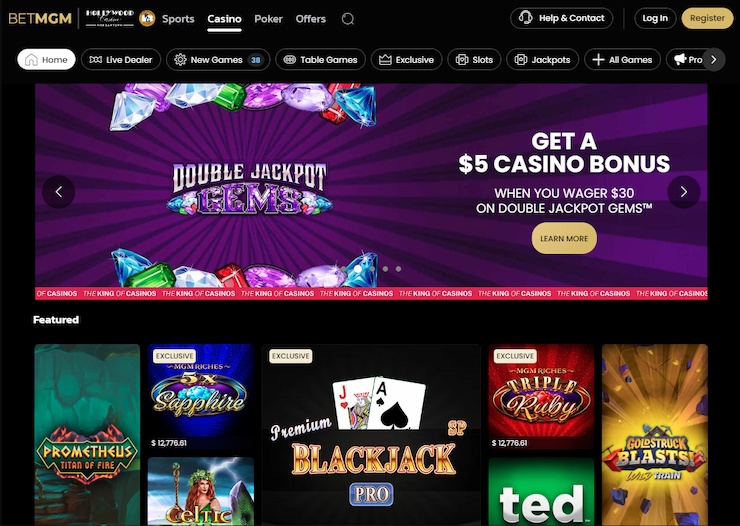
Even in a online setting like Level Up Casino, the human element remains crucial. The dealer is the game’s leader, maintaining tempo and rules objectively. In live streams, particular hand signals demonstrate settled wagers and transparency. They manage the speed, avoiding pauses from breaking the rhythm. Virtual table games replace this with algorithms that remove human error and direct contact, instantly calculating payouts and flawlessly executing every mechanical rule. Moving online completely alters the logistics—play accelerates significantly because real-world chip counting and casino bustle are removed. The interface positions your angle right at the rail, and multi-table play is enabled, normalizing statistical variance far sooner than a single-table land-based session ever could.
Game Versions, Payouts, and Probabilities
Not all versions of the same game name are the same, and the details reside in the fine print. I always review the info icon at Level Up Casino before placing a chip. Small discrepancies significantly change expected returns. Key variations are:
- Deck quantity: Single-deck blackjack provides better odds for card counters than six or eight-deck shoes, though casinos often compensate with 6:5 payouts in place of 3:2.
- Dealer rules: A dealer staying on soft 17 reduces the house edge a bit, making this a better rule variant.
- Surrender options: Late surrender allows you to relinquish half your bet after the dealer checks for blackjack, a potent tool during bad matchups that many novices overlook.
- Roulette specials: French Roulette often features “La Partage” or “En Prison,” returning half your even-money bet or holding it for the next spin when zero hits, significantly lowering the edge.
Grasping the payout ratio relative to probability is my favorite part of the analytical puzzle. In roulette, a straight-up bet returns 35 to 1, yet the true odds in European roulette are 36 to 1—that single unit gap is the house earnings. In blackjack, a natural pays 3 to 2, a reward that supports the game’s viability. Baccarat’s banker bet pays 0.95 to 1 after a 5% fee. Here is how the most common payouts match up with their risk:
- Blackjack Natural: Pays 3:2. Happens roughly once every 21 hands, making it the golden payout you must defend with safe strategy.
- Roulette Column Bet: Pays 2:1. Covers 12 numbers, giving a 32.4% likelihood in European play, providing a high-frequency swing zone for equilibrium-focused players.
- Baccarat Banker: Pays 0.95:1. With a win probability exceeding 45%, this is conceptually the most secure bet in the casino, even after the fee.
- Craps Place Bet (6 or 8): Pays 7:6. True odds are 6:5, holding the edge very low at about 1.52%, a go-to for intelligent craps players.
Card-Based Mechanics: Blackjack and Baccarat
Card games constitute the height of strategic nuance. In blackjack, the dealer follows a fixed algorithm: hit to 16, stand on 17. Your advantage stems from the freedom from such constraints—you can split, double, or surrender. The game runs on a depletion model where removed cards alter the probability of the next hand, a concept called composition-based strategy. Baccarat eliminates player options nearly completely. It runs on a predetermined drawing table dictating when a third card gets dealt, with the bank hand obeying complex rules connected with the third card of the player. At Level Up Casino, the software handles these procedural rules immediately, enabling you to focus only on the stake choice.
Standard Betting Strategies and Systems
I want you to understand that no strategy can remove the house edge, but systems can handle volatility. Here are the most frequently utilized approaches you will come across at the tables:
- Martingale System: A negative progression where you increase your bet after every loss, seeking to recover all previous losses with a single win. It requires a massive bankroll and swiftly hits table limits during a losing streak.
- Paroli System: A positive progression where you increase your bet after a win. This system attempts to capitalize on winning streaks while keeping the base stake low after a loss to curb downswings.
- D’Alembert System: A balanced progression where you raise your bet by one unit after a loss and lower it by one after a win, presuming wins and losses will balance out in the short term.
- Flat Betting: Putting the same wager steadily regardless of outcome. It is the most prudent approach, extending playing time and removing the risk of exponential loss scaling.
Mindful Gaming, Fund Oversight, and Skill Builders
Comprehending how a game works technically is useless without overseeing your own conduct at the table https://levelup.info.pl/. Table games are engaging, and online platforms like Level Up Casino create a fluid flow where hours can drift by. I regard my bankroll as an entertainment subscription, not a growth fund. I compute 30 to 40 betting units for a blackjack session to withstand normal variance. Digital tools like deposit limits and reality checks are foundational supports that preserve decision-making sharp. A frustrated, frustrated brain makes mathematically poor decisions, transforming a low house edge into a certain loss through human error.
I utilize demo modes extensively before wagering a single real chip on a new variant. Free play lets me assimilate the rhythm of a game like craps without pressure. Level Up Casino often provides virtual chips for these sandbox environments, enabling experimentation with aggressive progressions. You visibly see how often a bad streak hits and cultivate visceral respect for variance without financial scar tissue. When you transition to real play after sufficient simulation, the mechanical actions of clicking split, double, or clearing bets feel instinctive, reducing cognitive load during strategic pivots.
Mastering casino table games is a path through probability, discipline, and the art of controlled risk. I see them as living systems where every spin, deal, or roll is regulated by a transparent mechanical soul you can understand and respect. Once you master the internal logic behind the house edge and payment structures, you cease chasing losses and start executing precise decisions. By internalizing the rules discussed here and using the intuitive interfaces at Level Up Casino, you shift from a passive participant into an informed strategist who respects the game for the sophisticated entertainment it truly is.
Roulette and Craps Dynamics: Roulette and Craps
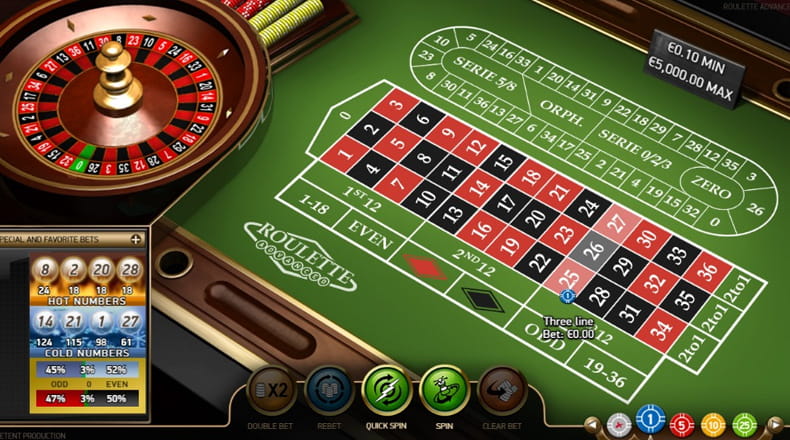
I consider the physical games offer the most genuine visual expectation. European Roulette features 37 pockets with a solitary zero, while the American variant introduces a dual zero, almost doubling the house edge. A slowing-down ball in a path rotating opposite the wheel dictates the outcome; digital versions certify randomness through certified sensors. Craps mechanics are in terms of social interaction more intricate. A shooter rolls two dice to set a “point.” The Pass Line is basic: a 7 or 11 triumphs on the come-out roll, while 2, 3, or 12 is defeated. Any other number establishes the point, and the roller endeavors to hit it again before a 7 emerges. This sequence produces palpable tension around the complex betting layout.
FAQ
What precisely constitutes a casino table game in contrast to a slot machine?
A casino table game generally features a designated playing surface where a dealer or croupier oversees the action using physical or simulated props like cards, dice, or a wheel. Unlike a slot machine, which is a solitary device based entirely on RNG, table games often integrate player decision-making directly into samorzad.pap.pl the outcome. The social element, particularly in digital live-stream form, creates a shared pace that differs from the isolated rapid-fire nature of slot spins.
What is the method by which the house edge function in practice?
The house edge is the statistical margin embedded within the payout ratios. It does not imply you lose a fixed percentage every hand; it means the payout for a win is marginally below the mathematical true odds of achieving that result. Over thousands of hands, this discrepancy guarantees the game remains profitable for the operator. It is a long-term mathematical inevitability, not a short-term rigging of any individual spin or card deal you encounter during play.
Is it preferable to play digital table games or live dealer versions?
This is completely based on your own choice for tempo and environment. Digital table games run significantly quicker because there is no pause for other players or physical card shuffling, perfect for rapidly honing tactics. Live dealer versions offer the genuine social interaction and openness of seeing a human deal real cards, but the speed is slower. Both variations use verified random processes or physical tools to guarantee the same statistical probabilities and random outcomes.
Is it possible to use card counting when playing online at Level Up Casino?
In live dealer blackjack, continuous shuffling machines are often used, which regularly reinsert discarded cards back into the deck after shallow penetration. This mechanism strategically cancels card counting by preventing meaningful deck composition changes that a counter would track. In virtual digital blackjack, the Random Number Generator completely reorders a full virtual deck every single hand, making the composition from the previous hand totally useless and counting impossible.
What is the single safest bet I can make at a table game?
Statistically, the Banker bet in Baccarat holds the lowest house edge of any regular casino wager, sitting at just over 1% after the 5% commission on wins. Nearly behind it are the Pass Line bet in Craps matched with maximum odds, or a basic strategy Blackjack hand. These bets are safe not because they win frequently, but because the proportion between your probability of winning and the casino’s profit margin is the smallest mathematically possible.
Why do table limits count for my strategy?
Table limits restrict both your minimum and maximum allowable bet per round, which directly impacts aggressive negative progression betting systems. If a table has a maximum limit that is only ten times the minimum, a Martingale player can only endure three consecutive losses https://biznes.interia.pl/gospodarka/news-ostateczny-upadek-karoliny-ludzie-do-zwolnienia-zaklad-do-za,nId,7328875 before being incapable to double again. Limits protect the casino from infinite betting progressions, but they also shield you from catastrophic exponential loss spirals that could deplete a bankroll far faster than flat betting ever could.
The way Randomness and the House Edge Interact
I need to be fully transparent about the mathematical engine that powers every game. The house edge is not a per-hand fee but the statistical probability that the outcome will favor the casino over infinite play. In European Roulette, the single zero creates a 2.7% edge. In blackjack, the edge varies wildly based on your strategic skill, dipping below 1% with perfect play. Table games function by balancing true odds—what you should mathematically be paid—against the actual odds the casino pays. This subtle discrepancy is the business model, yet it also provides the door to strategy. Grasping this interaction at Level Up Casino turns a blind guess into a calculated risk.
Understanding Core Casino Table Games and Their Cognitive Design
When I mention table games, I refer to entertainment played on a designated table and managed by a live dealer or a digital RNG interface. Unlike solitary slots, they use physical props like cards, dice, or a wheel, and the social dynamic is a defining trait even online, where live streaming closes the gap. The layout is psychological engineering: the roulette wheel’s non-sequential number distribution disrupts pattern recognition, while blackjack’s semicircle encourages a communal battle against the house. These dimensions and geometries, faithfully replicated at Level Up Casino, are cognitive tools that maintain the action moving at a rapid pace while presenting information in an intuitively readable way.